
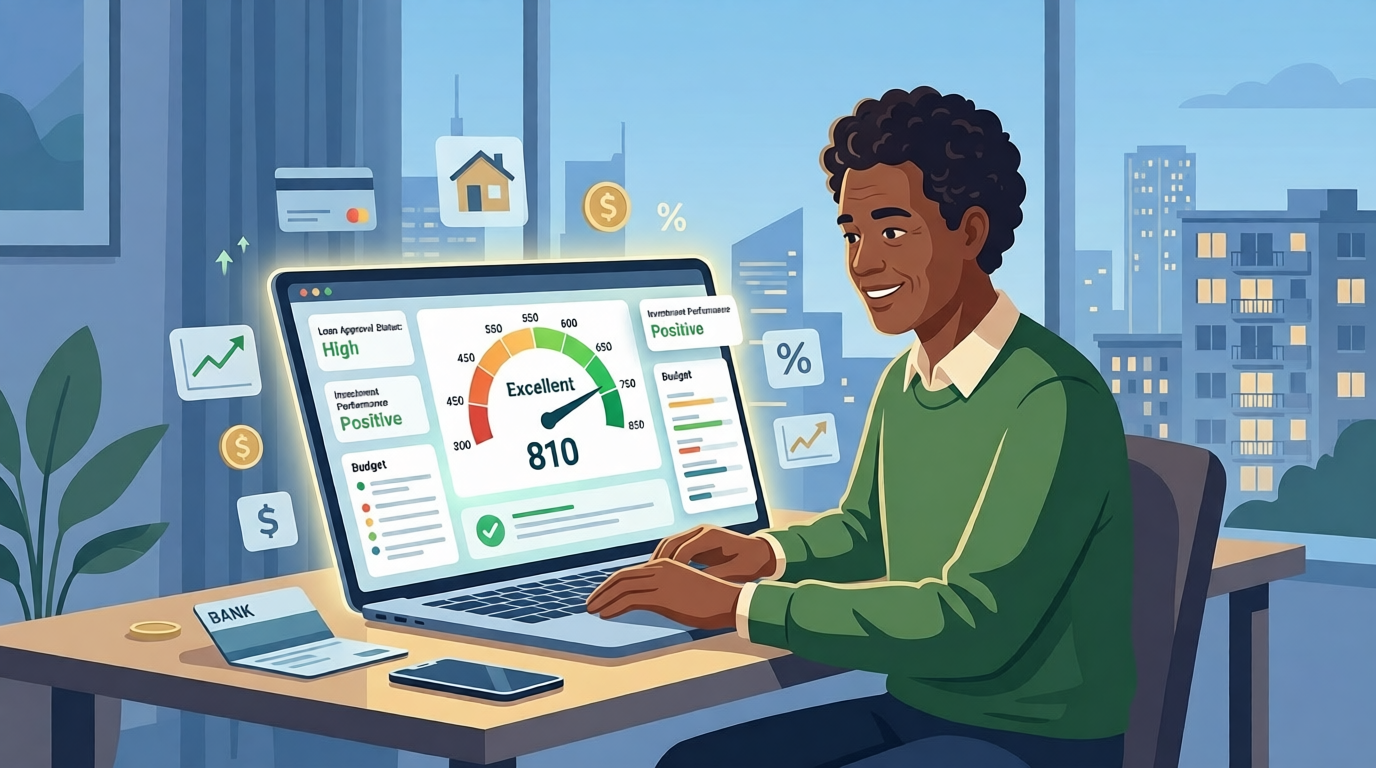
Your credit score quietly influences some of the biggest decisions in your life whether you get approved for a loan, qualify for an apartment, secure a low interest rate, or even land certain jobs. Despite its importance, many people don’t fully understand what a credit score is or how it works.
In simple terms, a credit score is a number that represents how trustworthy you are as a borrower. Lenders and other institutions use it to decide how risky it is to do business with you.
Understanding your credit score has never been more important. In today’s financial world, your score can directly impact your access to opportunities and how much you pay for them. A strong credit score can save you thousands of dollars over time, while a poor one can limit your options.
In this guide, we’ll break down everything you need to know from what credit scores are and how they’re calculated to how you can improve yours and avoid common mistakes.
What Is a Credit Score?
A credit score is a three digit number that reflects your creditworthiness, or how likely you are to repay borrowed money on time. It’s based on your credit history the record of how you’ve used credit over time.
Typical Credit Score Range
Most credit scores fall between 300 and 850:
- 300–579: Poor
- 580–669: Fair
- 670–739: Good
- 740–799: Very Good
- 800–850: Excellent
The higher your score, the more trustworthy you appear to lenders.
Purpose of a Credit Score
Credit scores help financial institutions make quick, consistent decisions about:
- Whether to approve your application
- What interest rate to offer
- How much credit to extend
Who Uses Credit Scores?
Your credit score isn’t just for banks. It’s used by:
- Lenders: Banks, credit unions, and credit card companies
- Landlords: To assess rental applicants
- Employers: In some cases, for background checks
- Insurance Companies: To help determine premiums
Major Credit Scoring Models
Not all credit scores are created equal. There are several scoring models, but two dominate the industry.
FICO Score
The FICO Score is the most widely used credit scoring model. Developed by the Fair Isaac Corporation, it’s used by the majority of lenders when making lending decisions.
VantageScore
VantageScore was created by the three major credit bureaus as an alternative to FICO. It uses similar factors but calculates scores differently.
Key Differences
- Scoring Criteria: Slight variations in how factors are weighted
- Data Requirements: VantageScore can generate a score with less credit history
- Usage: FICO is more widely used by lenders
Why You Have Multiple Scores
You don’t have just one credit score you have many. Each scoring model may calculate your score differently, and each credit bureau may have slightly different information about you.
The Five Key Factors That Determine Your Credit Score
Understanding these factors is essential if you want to improve your score.
1. Payment History (35%)
This is the most important factor.
- Do you pay your bills on time?
- Have you missed payments?
- Do you have accounts in collections?
Even one late payment can significantly impact your score, especially if it’s recent.
2. Credit Utilization (30%)
This refers to how much of your available credit you’re using.
- If you have a $10,000 credit limit and use $3,000, your utilization is 30%
- Experts recommend keeping it below 30%, ideally under 10%
High utilization signals financial stress and can lower your score.
3. Length of Credit History (15%)
The longer your credit history, the better.
- Age of your oldest account
- Average age of all accounts
Older accounts show stability and responsible credit use over time.
4. Credit Mix (10%)
Having a variety of credit types can help your score.
- Revolving credit: Credit cards
- Installment credit: Loans (auto, student, mortgage)
A mix demonstrates that you can manage different types of credit.
5. New Credit / Inquiries (10%)
When you apply for new credit, lenders perform a hard inquiry, which can slightly lower your score.
- Too many inquiries in a short time can signal risk
- Soft inquiries (like checking your own score) do not affect your score
How Credit Scores Are Calculated
Your credit score is based on data collected by three major credit bureaus:
- Equifax
- Experian
- TransUnion
How Bureaus Collect Data
These bureaus gather information from:
- Banks
- Credit card companies
- Lenders
- Collection agencies
They compile this data into your credit report.
How Scoring Models Use the Data
Scoring models analyze your credit report and assign a score based on the factors discussed earlier.
Why Scores Vary
Your score can differ between bureaus because:
- Not all lenders report to all bureaus
- Data may be updated at different times
- Each model calculates scores slightly differently
What Is Considered a “Good” Credit Score?
A “good” credit score typically starts around 670.
Score Ranges and Meaning
- Poor (300–579): Limited access to credit, high interest rates
- Fair (580–669): Some approval chances, but not ideal terms
- Good (670–739): Solid approval odds and reasonable rates
- Very Good (740–799): Better rates and higher limits
- Excellent (800–850): Best rates, premium offers
Real-World Impact
Your score affects:
- Loan approvals: Higher scores increase approval chances
- Interest rates: Lower scores mean higher costs
- Credit limits: Better scores often mean higher limits
How Credit Scores Affect Your Financial Life
Loans and Mortgages
A higher score can mean:
- Lower monthly payments
- Better loan terms
- Easier approval
Credit Cards
Your score determines:
- Approval likelihood
- Credit limits
- Rewards eligibility
Renting an Apartment
Landlords use credit scores to assess reliability. A low score can result in:
- Denial
- Higher deposits
Insurance Premiums
Some insurers use credit-based scores to set rates.
Employment Screenings
Certain employers check credit reports (not scores) as part of hiring.
Common Myths About Credit Scores
“Checking your score hurts it”
False. Checking your own score is a soft inquiry and has no impact.
“Closing old accounts improves your score”
Not necessarily. Closing accounts can:
- Increase utilization
- Reduce credit history length
“You need to carry a balance”
False. Paying your balance in full is better and avoids interest.
“Income affects your credit score”
Income is not included in credit score calculations.
How to Improve Your Credit Score
Improving your credit score takes time, but it’s absolutely achievable.
Short-Term Strategies
- Pay bills on time: Set reminders or automate payments
- Reduce balances: Lower your credit utilization
- Avoid new applications: Limit hard inquiries
Long-Term Strategies
- Build credit history: Keep accounts open and active
- Diversify credit: Add different types of credit responsibly
- Maintain low utilization: Consistency matters
Advanced Tips
- Request credit limit increases: Lowers utilization
- Become an authorized user: Benefit from someone else’s good history
- Consolidate debt: Simplify payments and reduce interest
How to Check Your Credit Score and Report
Free vs. Paid Services
You can check your credit score for free through:
- Credit card providers
- Financial apps
- Annual credit report websites
Paid services may offer additional monitoring and insights.
How Often to Check
Check your score:
- At least once a month
- Before applying for major credit
Monitoring Tools
Credit monitoring services alert you to:
- Changes in your score
- New accounts or inquiries
- Potential fraud
Importance of Reviewing Reports
Regularly reviewing your credit report helps you:
- Catch errors
- Detect identity theft
- Stay informed
What to Do If You Find Errors
Errors on your credit report are more common than you might think.
Common Errors
- Incorrect account balances
- Accounts that don’t belong to you
- Duplicate entries
- Outdated information
How to Dispute Errors
- Identify the error
- Gather supporting documents
- File a dispute with the credit bureau
- Follow up
Timeline
Credit bureaus typically have 30 days to investigate and respond.
Your Rights
Under consumer protection laws, you have the right to:
- Accurate reporting
- Dispute errors
- Have incorrect data corrected
Special Situations
Building Credit from Scratch
Start with:
- Secured credit cards
- Credit builder loans
- Becoming an authorized user
Rebuilding After Bad Credit
Focus on:
- Consistent on-time payments
- Reducing debt
- Avoiding new delinquencies
Students and Young Adults
Early habits matter:
- Start small
- Use credit responsibly
- Monitor your score
Immigrants and Newcomers
Options may include:
- Alternative credit programs
- International credit transfers (in some cases)
- Secured products
The Future of Credit Scoring
Credit scoring is evolving rapidly.
Emerging Trends
- Alternative data: Rent, utility, and subscription payments
- AI-based models: More nuanced risk assessments
Financial Inclusion
New models aim to:
- Expand access to credit
- Help underserved populations build credit
Changing Lending Practices
Lenders are exploring more holistic ways to evaluate borrowers, potentially reducing reliance on traditional scores.
Conclusion
Credit scores play a crucial role in your financial life. They affect your ability to borrow, your cost of borrowing, and even your access to housing and employment opportunities.
The key takeaways:
- Your credit score is based on your financial behavior
- Payment history and credit utilization matter the most
- You can improve your score with consistent, responsible habits
- Monitoring your credit regularly is essential
The good news is that your credit score is not fixed. With the right strategies and discipline, you can build and maintain a strong score over time and unlock better financial opportunities as a result.